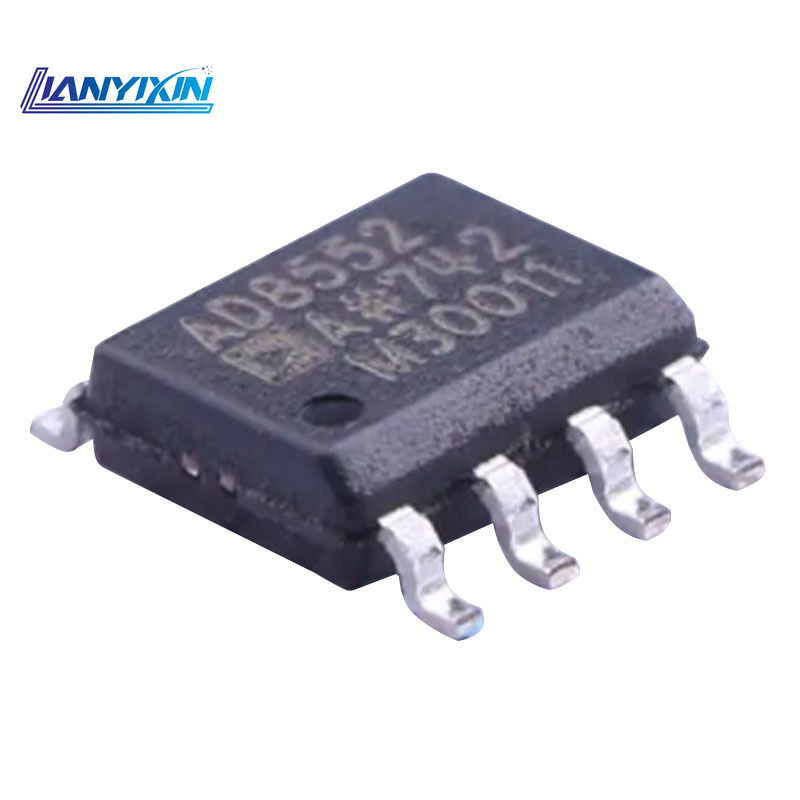
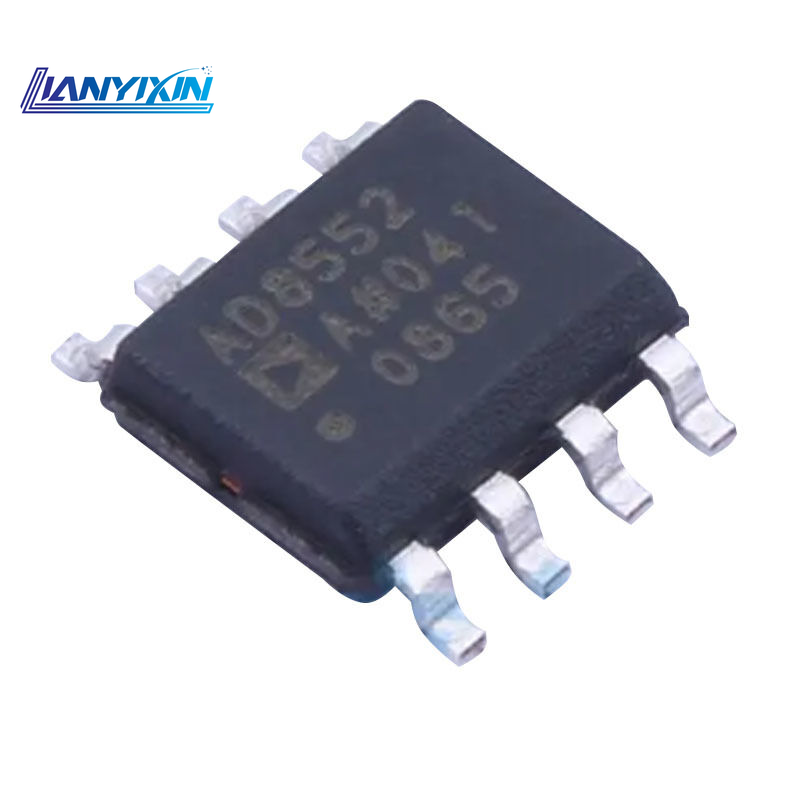
AD8552ARZ-REEL · Analog Devices (ADI) · Circuits intégrés
- Courant de polarisation d’entrée (Ib)
- 160pA
- Tension de décalage d’entrée (Vos)
- 1μV
Le prix, la disponibilité et la livraison sont confirmés dans le devis.
Demander un devisMême modèle · paramètres cohérents
Caractéristiques disponibles sur demande.
| Paramètre | Valeur |
|---|---|
| Référence | ADM2483 |
| Série | ADM2483 |
Aucun paramètre correspondant
Ces paramètres concernent ce modèle. Vérifiez le boîtier et les conditions de mesure dans la fiche du fabricant.
La description localisée n’est pas encore disponible. Les paramètres de ce modèle sont présentés ci-dessous.
ADM2483The ADM2483 differential bus transceiver is an integrated, galvanically isolated component designed for bidirectional data communication on balanced, multipoint bus transmission lines. It complies with ANSI EIA/TIA-485-A and ISO 8482: 1987(E). Using Analog Devices’ iCoupler technology, the ADM2483 combines a 3-channel isolator, a three-state differential line driver, and a differential input receiver into a single package. The logic side of the device is powered with either a 5 V or 3 V supply, and the bus side uses a 5 V supply only. The ADM2483 is slew-limited to reduce reflections with improperly terminated transmission lines. The controlled slew rate limits the data rate to 500 kbps. The device’s input impedance is 96 kΩ, allowing up to 256 transceivers on the bus. Its driver has an active-high enable feature. The driver differential outputs and receiver differential inputs are connected internally to form a differential I/O port. When the driver is disabled or when VDD1 or VDD2 = 0 V, this imposes minimal loading on the bus. An active-high receiver disable feature, which causes the receive output to enter a high impedance state, is provided as well. The receiver inputs have a true fail-safe feature that ensures a logic-high receiver output level when the inputs are open or shorted. This guarantees that the receiver outputs are in a known state before communication begins and at the point when communication ends.